
About
The League of Extraordinary Osteopaths
Developing Extraordinary Osteopaths

Jamie Archer
Osteopath, Educator and Co-Founder of The LXO
Jamie Archer BOst (Distinction), PGCert Applied Clinical Anatomy is a registered osteopath and educator with more than 20 years experience in clinical osteopathic practice and osteopathic education.
His career has combined clinical practice with a longstanding interest in osteopathic principles, applied clinical anatomy, palpation and the development of practical osteopathic skill.
As co-founder of The LXO, Jamie now brings these areas together in postgraduate education designed to help qualified osteopaths continue developing how they think, examine, feel and work with their hands in clinical practice.
An Early Obsession With Osteopathic Technique
After graduating with distinction from the British School of Osteopathy in 2005, Jamie developed what he readily describes as an obsession with osteopathic technique.
He wanted to understand why apparently similar techniques could feel and work so differently in different hands and what experienced osteopaths were doing that was difficult to capture simply by learning the steps of a technique.
That interest took him deeper into the history of osteopathy, classical osteopathic teaching and the methods of the profession's early practitioners. He collected original and historical osteopathic texts, studied different approaches to technique and sought opportunities to learn directly from osteopaths whose knowledge and practical skill had developed over decades of clinical practice.

Learning From an Earlier Generation
Jamie's interest in the origins and development of osteopathic technique led him to study Classical Osteopathy and to spend time learning from John Wernham, who is widely regarded as having studied under John Martin Littlejohn.
Jamie later worked as Wernham's clinical collegaue and went on to be a longstanding faculty member at the Institute of Classical Osteopathy.
Alongside this, he continued to study the writings and methods of A.T. Still and other early osteopathic practitioners, developing an extensive collection of historical osteopathic texts and source material.
Looking Beyond Technique
As Jamie's experience developed, so did the questions he was asking. It was no longer enough to know how a technique was performed. He wanted to understand more clearly what he was feeling, why he might choose one approach over another and how anatomy, mechanics and osteopathic principles informed what he was doing with his hands.
This led to a deeper study of applied clinical anatomy, including postgraduate study at Keele University where he completed a Postgraduate Certificate in Applied Clinical Anatomy and undertook practical anatomical study and dissection.
Rather than replacing his interest in technique, this changed the way he thought about it. Technique became part of a much bigger clinical picture, informed by anatomy, palpation, examination and an understanding of the principles behind its application.

From Practitioner to Educator
Alongside more than 20 years in clinical practice, teaching has become an important part of Jamie's own development as an osteopath.
His educational experience has included teaching Classical Osteopathy, working as a clinical tutor and later as Clinical and Professional Osteopathic Lead at the College of Osteopaths, as well as delivering postgraduate education to osteopaths in the UK and internationally.
Teaching has required him to examine and articulate things that can easily become intuitive with experience. Why choose this technique? What are you actually feeling? What does the examination tell you? Why does the anatomy matter? And how do you help another osteopath develop these abilities rather than simply reproduce what they have been shown?
Those questions have continued to shape both Jamie's own clinical thinking and the way he approaches osteopathic education.
Exploring the Roots of Osteopathy
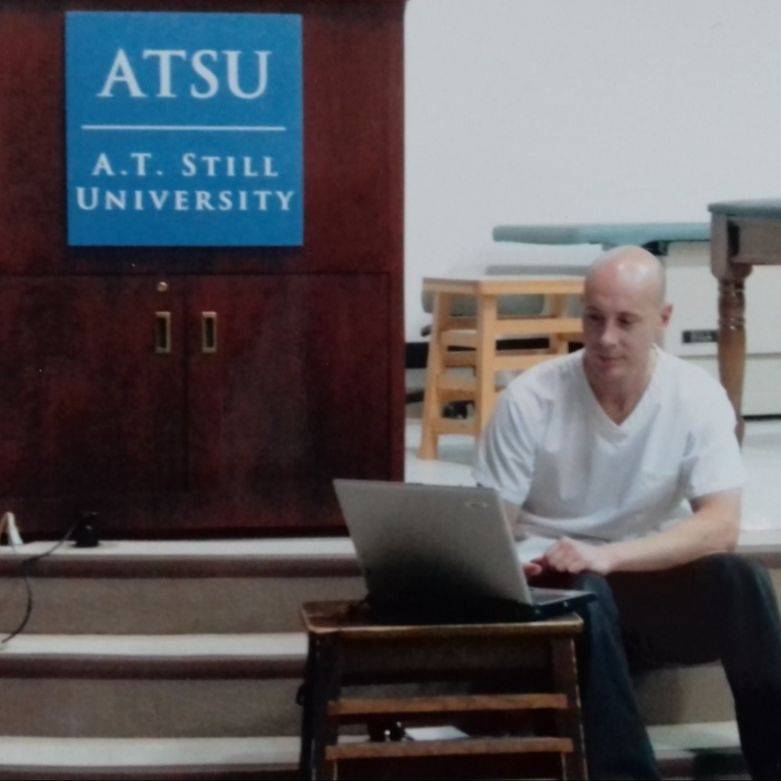
Jamie's interest in the origins of osteopathy has continued alongside his clinical practice and teaching, particularly through his study of A.T. Still and the methods used by the profession's early practitioners.
His research has taken him to the Museum of Osteopathic Medicine in Kirksville, Missouri, where he has worked with historical source material to explore how Still practised and taught osteopathy. This work has also contributed to articles published in the AAO Journal examining aspects of Still's methods and techniques.
Jamie has subsequently had the opportunity to teach in Kirksville and to work with Jason Haxton, Director of the Museum of Osteopathic Medicine, bringing historical source material together with practical osteopathic teaching.
For Jamie, studying osteopathic history isn't about trying to recreate the past. It provides another way of questioning contemporary practice, understanding where osteopathic ideas came from and considering what remains relevant to the way osteopaths think and practice today.
Bringing the Pieces Together
Over time, the different strands of Jamie's work began to come together. Clinical experience, anatomy, osteopathic principles, history, palpation and technique were not separate areas to be studied in isolation. Each changed the way he understood and applied the others.
The more he taught, the more he became interested in what actually helps an osteopath continue developing after qualification. Learning another technique or accumulating more knowledge can be valuable, but neither necessarily changes what happens with the patient in front of you.
For Jamie, meaningful clinical development comes from learning to connect what you know with what you observe, examine and feel, using that information to make clearer clinical decisions and developing the practical capability to act on them.
This thinking now underpins the way Jamie teaches and the educational approach that continues to shape The LXO.
Creating The LXO
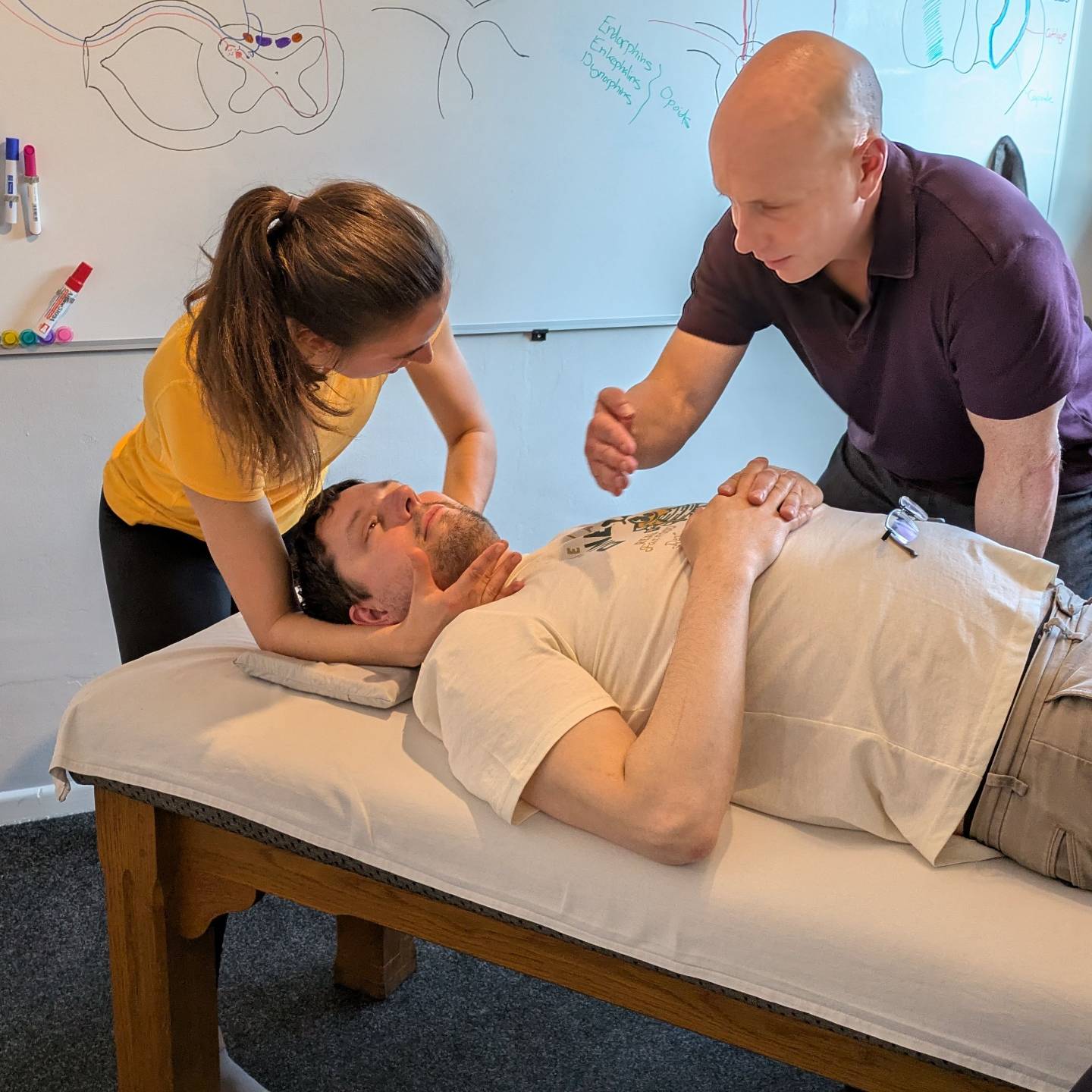
The LXO was created by Jamie and Gila Archer from a shared belief that postgraduate osteopathic education should do more than provide practitioners with more information or another collection of techniques.
Jamie's experience in clinical practice and osteopathic education, combined with Gila's background in education and learning, led them to think more deliberately about how qualified osteopaths continue to develop after graduation.
What began with a strong emphasis on practical osteopathic technique has continued to evolve. The LXO now brings together clinical reasoning, osteopathic principles, applied clinical anatomy, palpation and practical technical skill, helping osteopaths connect these areas rather than developing each in isolation.
At the heart of The LXO is a simple idea: becoming a more experienced osteopath and continuing to develop as an osteopath are not necessarily the same thing. Meaningful development requires opportunities to question, apply, practice, reflect and refine over time.

Continue Your Development with The LXO
Today, Jamie continues to combine clinical practice with the development and delivery of postgraduate osteopathic education through The LXO.
Explore The LXO to discover our membership, Osteopath Clinical Development Pathway, postgraduate courses and international teaching.
Explore The LXO